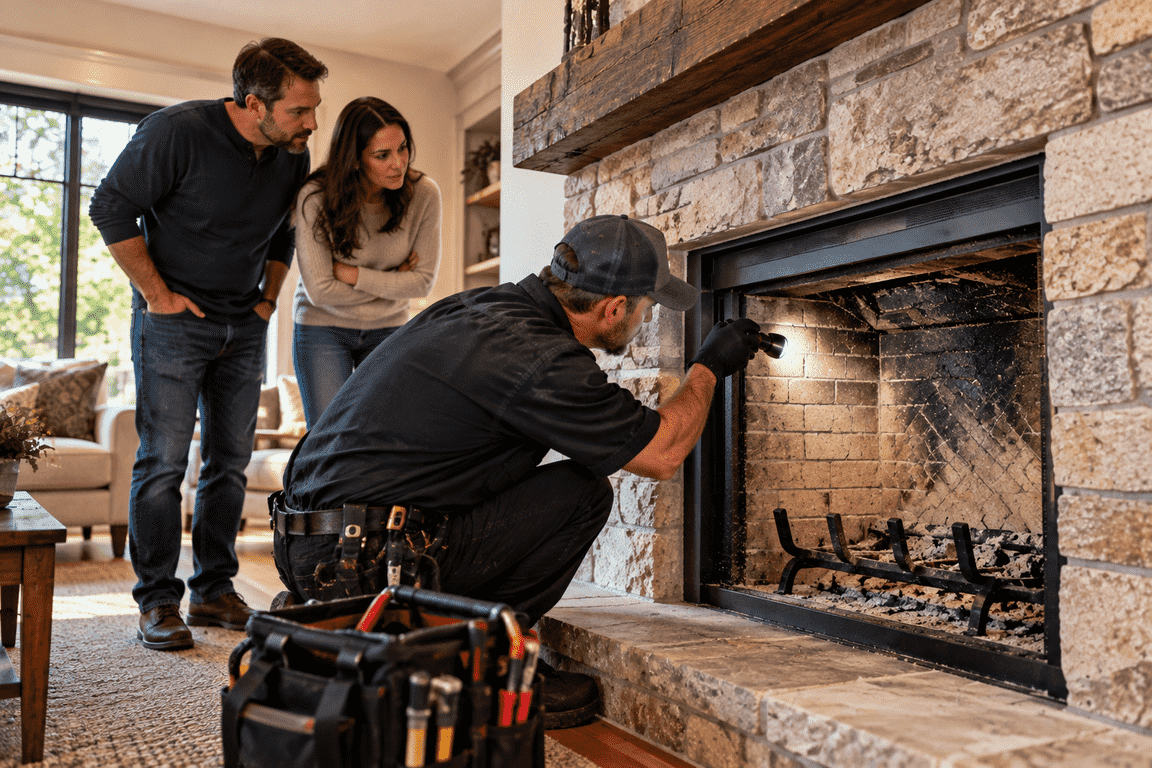
A fireplace can sell a house. It’s the cozy corner, the winter evening, maybe the reason you made an offer.
But a fireplace that looks perfect at a showing can still be a hazard. Nobody checks the part you can’t see.
Cracked flue liners, crumbling masonry, moisture damage, hidden blockages: they go unnoticed for years, especially when the last owners barely used the fireplace.
Buying in Tulsa or a nearby community? A
chimney inspection before closing finds the problems while they still belong to the seller.
Doesn’t a Regular Home Inspection Cover the Chimney?
Only on the surface. Plenty of buyers learn that the hard way.
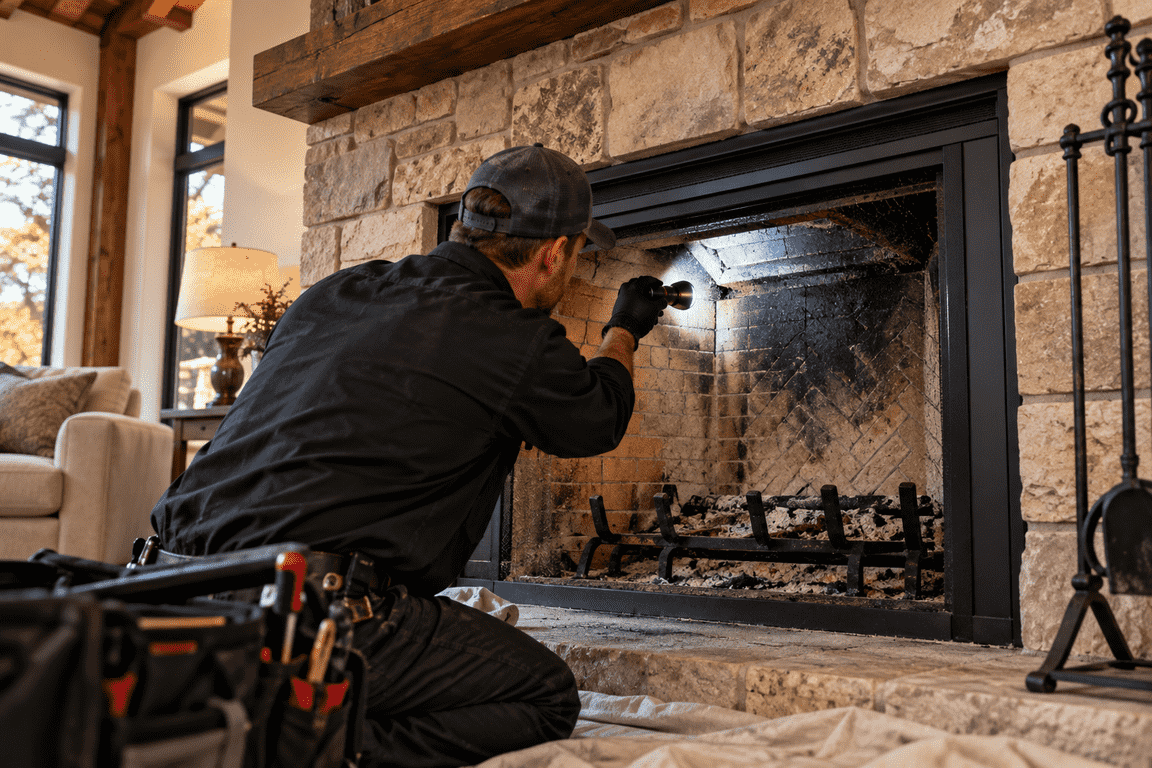
A general home inspection is a visual check of whatever is easy to reach. It isn’t a full evaluation of the system. The inspector can flag visible cracks, missing parts, and water stains. The inside of the flue is another story. Seeing it takes specialized equipment.
So even a clean home inspection doesn’t settle it. The chimney still needs its own look.
What Problems Can Be Hiding Inside a Chimney?
You won’t spot chimney trouble from the couch. Some of it builds slowly. Some of it is just years of skipped maintenance catching up.
Damaged or Deteriorating Flue Liners
The liner keeps heat and combustion byproducts contained as they travel up the flue.
When clay tiles crack or mortar joints fail, the chimney stops doing its job. You can’t see that damage without the right inspection tools.
Creosote Buildup
Wood fires leave behind creosote, a combustible residue that coats the inside of the chimney.
Skip the cleanings and it stacks up. More buildup means more chimney fire risk.
If the previous owner burned often and rarely cleaned, assume heavy deposits.
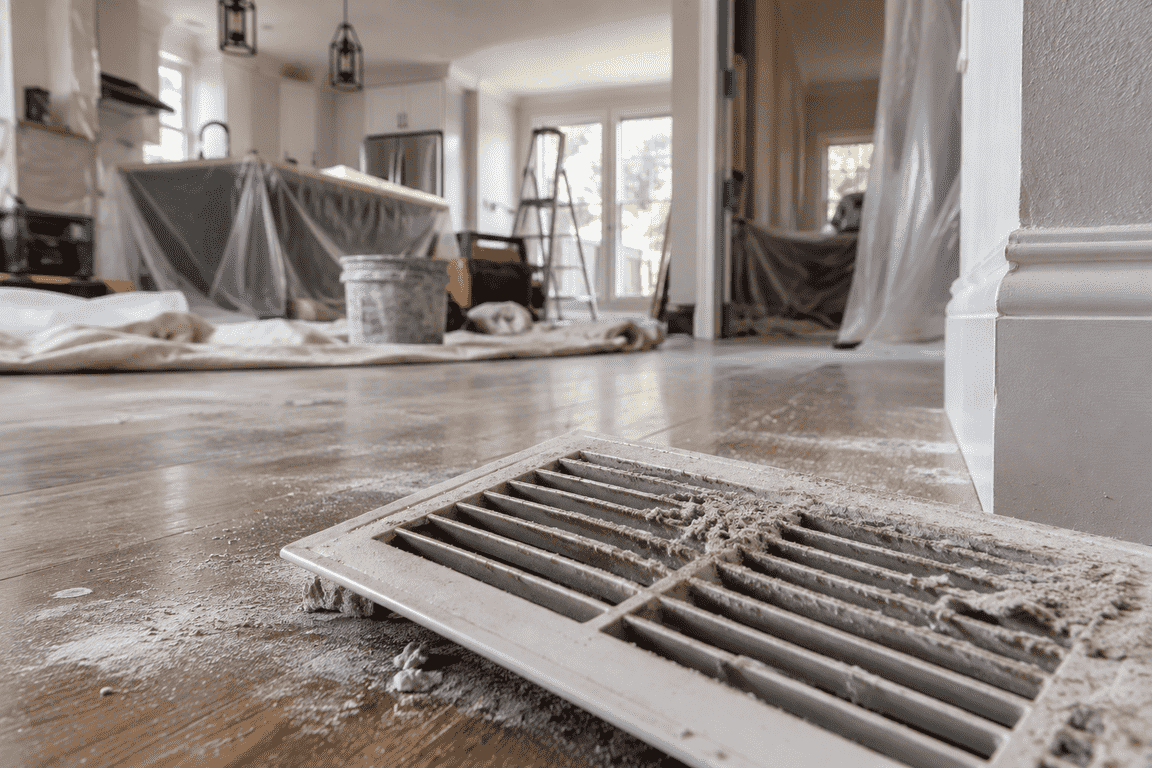
Professional chimney cleaning gets rid of soot and creosote.
Water Damage and Masonry Deterioration
Tulsa’s thunderstorms and temperature swings are hard on anything outdoors, chimneys included.
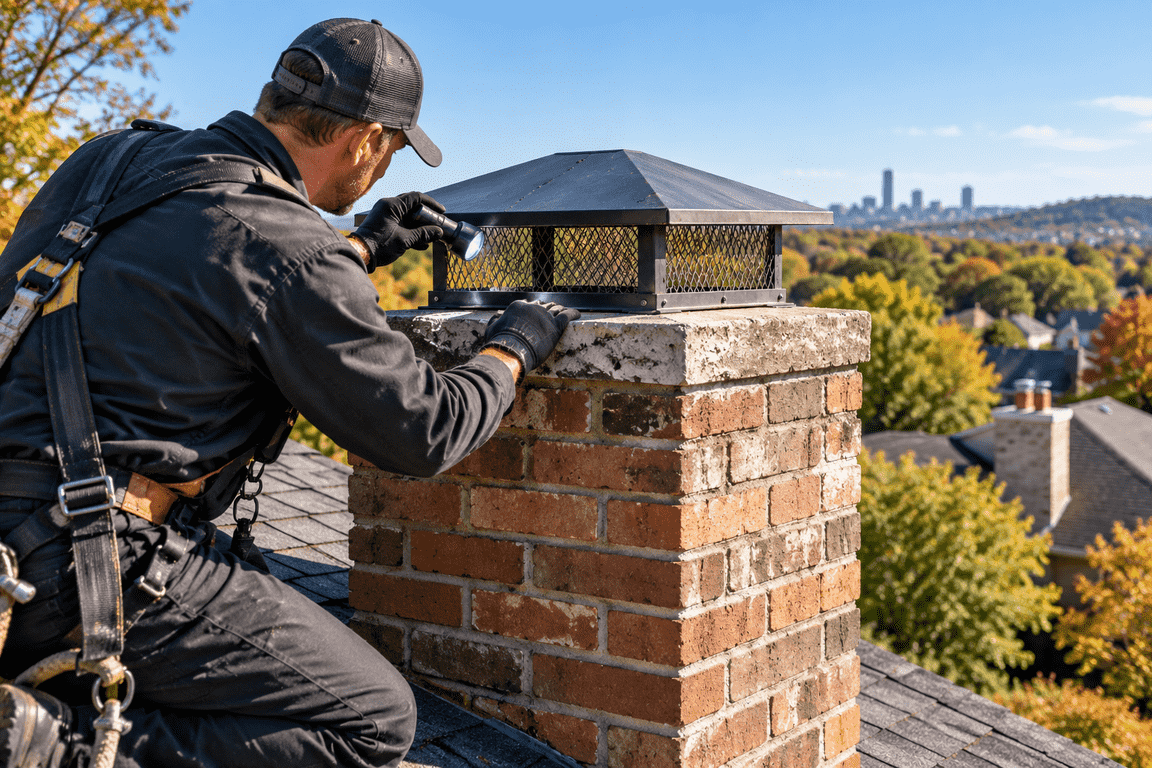
Bad flashing. Crumbling mortar. A cracked crown. A missing cap. Any one of them lets water in, and water eats through masonry, metal, and the materials around the chimney.
Animal Nests and Other Blockages
A chimney nobody uses is an open invitation to birds and other animals.
Leaves, sticks, nesting material, and debris can clog the flue. Then smoke and gases have nowhere to go.
From the yard, everything looks fine. The problem is tucked out of sight.
Why a Level 2 Chimney Inspection Matters When Buying a Home
Chimney inspections come in different depths.
NFPA 211, the National Fire Protection Association’s standard, calls for a Level 2 chimney inspection when a property is sold or transferred.
A Level 2 reaches more areas than a basic Level 1 and adds a video scan of the flue’s interior. You see what you could never see from the fireplace opening or the roof.
A Level 2 inspection generally evaluates:
- Readily accessible interior and exterior chimney components
- Accessible portions of attics, crawl spaces, and basements
- Internal flue surfaces, using video inspection equipment
- Visible signs of deterioration, deposits, and obstructions
- Conditions that may affect the chimney’s safe operation
That’s real information, and you get it before you commit.
When Should You Schedule the Inspection?
Book it during your home inspection contingency period, before closing.
You’ll have time to read the findings and decide what happens next: more evaluation, a cleaning, or repairs.
If the inspection turns up problems, you may be able to negotiate repairs or other arrangements with the seller. That depends on your contract and the circumstances of the sale.
After closing, every missed problem is yours.
Buying an older home in Tulsa,
Broken Arrow, or a nearby community? Maintenance history counts for even more.
What if the Inspection Finds Chimney Damage?
Don’t panic, and don’t walk away on reflex.
Some chimney issues are routine maintenance. Others take real work, particularly when structural parts or the flue liner are damaged.
Common recommendations include:
- Removing accumulated soot or creosote
- Replacing a damaged chimney cap
- Repairing deteriorated mortar joints
- Correcting flashing or crown problems
- Addressing damaged flue components
- Removing blockages or nesting materials
The point is to know what you’re dealing with before you decide.
If repairs are needed, a qualified professional can assess the damage and recommend the right
chimney repair.
What Should You Ask the Seller About the Fireplace?
Get its history first.
- When was the chimney last inspected?
- Has it ever been professionally cleaned?
- Any leaks, smoke problems, or chimney fires?
- Were repairs made, and is there paperwork to prove it?
Ask how often they used it, too.
Unused doesn’t mean fine. A fireplace that sat idle for years can still have moisture intrusion, animal activity, or deterioration.
If the seller has no maintenance records, a professional fireplace safety inspection matters even more.
Put the Chimney on Your Homebuying Checklist
Buying a home means a pile of inspections, decisions, and surprise bills. Roof, foundation, plumbing, and electrical get all the attention. The fireplace gets forgotten.
Add it to the list.
A professional inspection turns up hidden damage, ventilation concerns, built-up deposits, and anything else that affects how the fireplace works.
Most of all, it shows you what you’re really buying before you move in.
Schedule a Chimney Inspection Before Closing
Older Tulsa home with a traditional masonry fireplace? Newer one with a factory-built system? Either way, know the chimney’s condition before you commit.
Air Care Services provides chimney inspection, cleaning, and related services for homeowners throughout
Tulsa
and surrounding areas.
Buying a home with a fireplace?
Contact Air Care Services to schedule a professional chimney inspection before closing. Look now, and nothing surprises you after you move in.